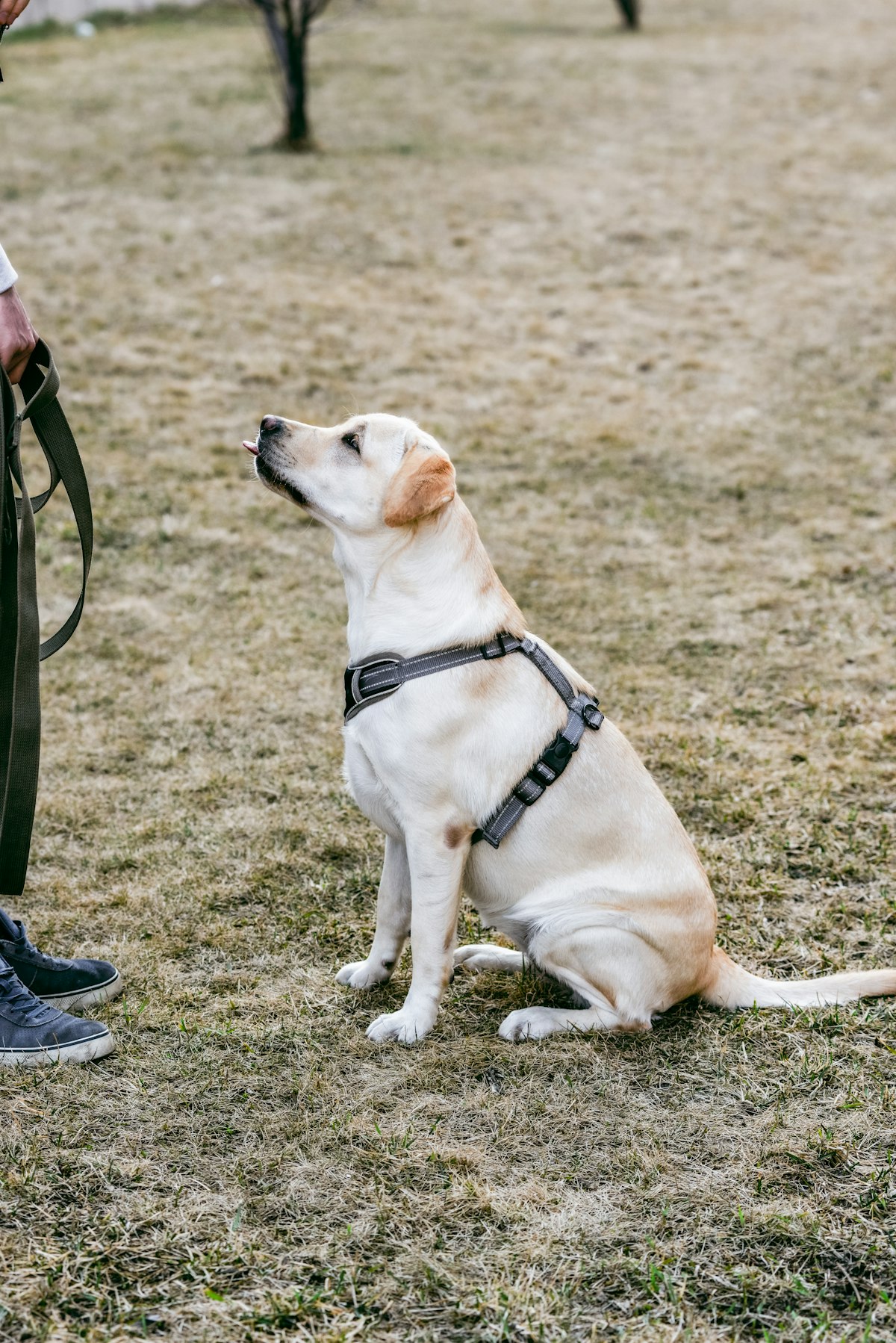
Anyone who builds a pedalboard learns to skip the marketing blurb and scroll straight down to the numbers. Input impedance, current draw, enclosure size: the facts decide whether a box earns its spot. That reflex comes in handy away from the bench too, for instance when the dog asleep beside your amp needs something new to wear on walks.
Treat a personalised harness like any other unit you are about to add to the rig, and work through it in order.
Step 1: Check what it is built from
A generic harness off a pet-shop hook gives you a fabric and a colour, and there the information stops. The version worth speccing here combines three materials, polyester, neoprene and mesh fabric, on a strap that adjusts. Instead of a patch stitched on or a decal stuck over the top, the artwork goes in by sublimation: heat presses the design right into the material.
Step 2: Size it before you think about looks
Four sizes are offered, starting at XS and climbing through S and M to L. Loop a flexible tape round the ribcage first and the neck second, the way you would confirm jack spacing before drilling an enclosure. Jot both figures on paper so the order screen holds no guesswork, and let the adjustable strap handle the last centimetre or two.
Step 3: Give it a clean signal
Garbage in, garbage out applies to pictures as much as to signal chains. Pick a sharp shot under decent light, the face in full view and pointed more or less towards the lens. Nothing fancier than the camera on your phone is required. Pass over frames where an ear is cut off at the edge or your fingers are covering the snout.
Step 4: Sign off the layout, then pay
Little Red Cute builds a personalised dog harness around that single upload. Choose one of the styles on offer and your dog gets illustrated from the photo, with face and name laid out across the chest panel. The completed design then comes up on your screen for inspection. Payment only happens once you have given it the nod, and production waits for that same nod. Only then is the piece made, here in Singapore, to your order.
For a tinkerer, this is the satisfying bit. It works like checking a drilling template before the first hole goes into the aluminium. A stock harness with a printed paw cannot give you that moment, because it was never about your particular dog in the first place.
Spec it once, study what appears on screen, and the dog under the desk ends up with kit that is plainly theirs.